
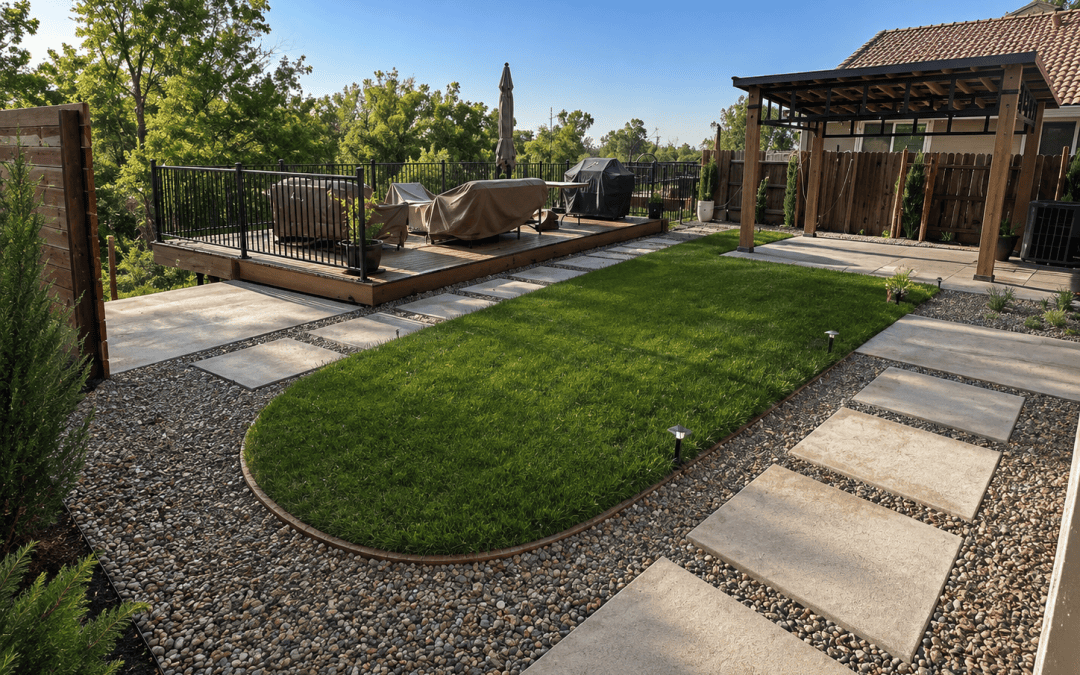
When homeowners start planning a patio, walkway, pool area, or outdoor living space, one of the first questions that usually comes up is whether to use concrete or pavers.
Both can be great options. Both can make a yard feel more finished, more usable, and more connected to the home. But they do not create the exact same look, and they are not always the right fit for every project.
The best choice depends on the style of the home, the layout of the yard, how the space will be used, and the overall look the homeowner wants.
For Sacramento homeowners, concrete and pavers are both common choices for outdoor spaces because they work well for patios, walkways, driveways, pool areas, and backyard installs. The key is choosing the material that makes the most sense for the space.
Concrete Creates a Clean, Simple Look
Concrete is a strong option when the goal is a clean and simple outdoor space. It works well for patios, walkways, driveways, side yards, and pool areas because it creates a smooth surface that feels practical and easy to use.
Concrete can also help make a yard feel more open. For modern homes or properties with a cleaner design style, concrete often fits well because it does not feel too busy.
It can be poured in different shapes, which makes it useful for curved walkways, large patios, or spaces where the design needs to follow the flow of the yard.
Pavers Add More Texture and Detail
Pavers create a different feel. Instead of one solid surface, pavers bring in pattern, texture, and more visual detail.
They can make a patio, walkway, or seating area feel more custom. Pavers are often used when homeowners want the hardscape to stand out more as a design feature.
Because pavers come in different shapes, sizes, colors, and patterns, they can be used to create a more detailed look. This can work especially well for outdoor living areas, fire pit spaces, pool surrounds, garden paths, or areas where the homeowner wants more character.
Think About the Style of the Home
The right material should fit the home, not compete with it.
A modern home may look better with clean concrete, large stepping pads, or simple hardscape lines. A more traditional home may work well with pavers, brick, stone, or a textured layout.
The goal is to make the outdoor space feel like it belongs with the property. When the hardscape matches the style of the home, the whole yard feels more intentional.
If the material feels disconnected from the house, even a nice install can look out of place.
Consider How the Space Will Be Used
The way the space will be used should also guide the decision.
For a large patio where people will be eating, sitting, and moving around often, both concrete and pavers can work well. For a walkway, the choice may depend on whether the homeowner wants a clean direct path or something with more texture and design.
For pool areas, homeowners may want to think about comfort, drainage, layout, and how the hardscape connects to the rest of the yard. Around a pool, the surrounding material has a big impact on how finished the whole backyard feels.
The best material is not just the one that looks good. It is the one that fits how people will actually use the space.
Maintenance Matters
Every outdoor material needs some level of care over time. Concrete and pavers are both durable, but they age differently.
Concrete gives a clean surface, but it can crack over time depending on the soil, installation, drainage, and weather conditions. Pavers can shift if the base is not installed correctly, but individual pieces can sometimes be adjusted or replaced more easily than a poured slab.
This is why installation quality matters so much. The prep work underneath the surface is just as important as the material people see when the project is finished.
A good hardscape install starts with proper planning, grading, base preparation, and layout.
Cost Depends on the Project
Homeowners often ask which option costs less. In many cases, concrete can be more budget-friendly than pavers, but the actual cost depends on the size of the space, design details, access, prep work, material selection, and the complexity of the project.
A simple concrete patio will be different from a custom stamped or shaped concrete layout. A basic paver area will be different from a detailed pattern with borders and multiple materials.
Instead of choosing only based on price, it is better to think about long-term value. The right material should fit the project, hold up well, and make the yard more usable.
Concrete Works Well for Larger, Cleaner Areas
Concrete can be a good choice when the project needs a larger surface that feels simple and functional.
This may include:
- Backyard patios
- Walkways
- Poolside areas
- Driveways
- Side yard paths
- Outdoor seating areas
Concrete can help create a strong foundation for the rest of the yard. When paired with lawn, rock, mulch, planting, or stepping stones, it can make the outdoor space feel clean and complete.
Pavers Work Well for Design-Focused Areas
Pavers can be a good choice when the homeowner wants more visual interest or a more custom look.
This may include:
- Fire pit areas
- Garden paths
- Courtyard spaces
- Detailed patios
- Walkways with more texture
- Outdoor living areas
Pavers can help define a space and make it feel like a feature instead of just a surface.
The Best Designs Often Use Materials Together
Sometimes the best option is not choosing only one material. A strong landscape design may use concrete in one area and pavers, stone, gravel, or rock in another.
For example, a backyard might use concrete for the main patio, stepping stones to connect different zones, decorative rock for ground cover, and pavers around a fire feature.
When materials are used together the right way, the yard feels layered and complete. The important part is making sure the materials feel connected instead of random.
Do Not Forget the Bigger Picture
The hardscape is only one part of the yard. Concrete or pavers will look better when they are planned with the full landscape in mind.
That includes planting, lawn, rock, mulch, drainage, irrigation, shade, privacy, and how people move through the space.
A patio on its own can help, but a patio that connects well to the rest of the yard can completely change how the space feels.
Final Thoughts
Concrete and pavers can both be great choices for an outdoor space. Concrete offers a clean, simple, practical look. Pavers add texture, pattern, and more design detail.
The better option depends on the home, the yard, the budget, and how the space will be used.
For Sacramento homeowners, the most important thing is not just choosing a material. It is making sure that material is installed correctly and planned as part of the full landscape.
At Bush Landscaping, we believe hardscape should make a yard feel more complete, not just fill space. Whether the project calls for concrete, pavers, stone, or a mix of materials, the goal is always to build an outdoor space that looks good, works well, and fits the property.