
A yard can have nice features and still feel unfinished. A patio may look good on its own. The lawn may be healthy. The plants may be new. The walkway may be clean. But if all of those pieces do not work together, the yard can start to feel disconnected.
That is what makes a landscape look pieced together.
This happens often when homeowners add one thing at a time without a larger plan. Maybe they start with a concrete patio, then add rock later, then replace a section of lawn, then add plants, then decide they want a fire pit or walkway. Each update may make sense in the moment, but over time the yard can start to look like a collection of separate projects instead of one complete outdoor space.
For homeowners in Sacramento, Roseville, Rocklin, Folsom, Granite Bay, El Dorado Hills, and nearby areas, the best landscapes usually start with a clear plan. The goal is not always to do everything at once. The goal is to make sure every choice supports the bigger picture.
Start With the Full Yard, Not One Feature
One of the biggest mistakes homeowners make is starting with one feature before thinking about the whole yard.
A patio, walkway, lawn area, pool surround, planting bed, or fire pit can all be great additions. But each one needs to fit into the overall layout.
Before choosing materials or starting installation, it helps to ask how the yard should function. Where will people sit? How will they move through the space? Where does shade matter? What areas need privacy? What parts of the yard should feel open? What views should be highlighted?
When the full yard is considered first, every feature has a reason. That is what makes the finished space feel intentional instead of random.
Choose Materials That Work Together
A pieced-together yard often has too many materials that do not relate to each other. There may be one type of rock in one area, a different mulch in another, pavers that do not match the patio, or edging that feels disconnected from the rest of the design.
Materials do not all have to match perfectly, but they should feel like they belong together.
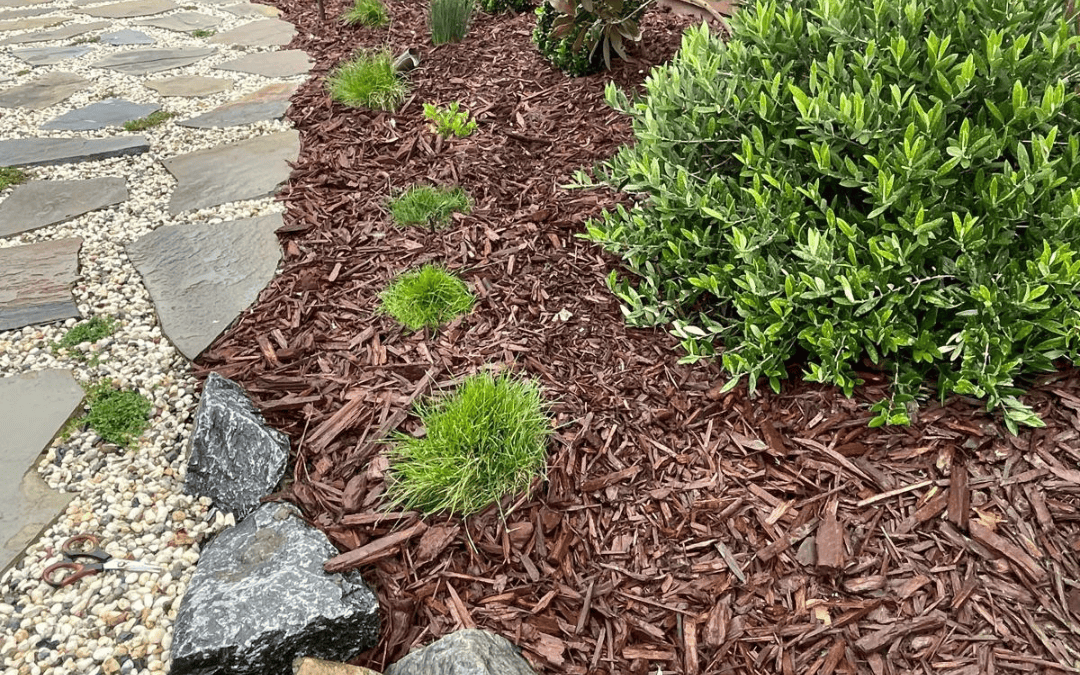
Concrete, pavers, gravel, mulch, stone, boulders, lawn, and planting can all work in the same yard when they are chosen with intention. The colors, textures, and shapes should support the home and the overall style of the landscape.
A modern home may need cleaner lines and simpler materials. A more traditional property may feel better with softer curves, natural stone, or fuller planting. The right material choices help the yard feel cohesive from one area to the next.
Make Sure the Hardscape Comes First
Hardscape is the structure of the yard. This includes patios, walkways, steps, retaining walls, pool areas, concrete, pavers, and seating spaces.
When hardscape is added without a plan, it can make the rest of the yard harder to design. A patio may end up too small. A walkway may not connect to the right place. A fire pit may feel dropped into the yard instead of built into the layout.
Good hardscape gives the yard direction. It shows people where to walk, where to gather, and how to use the space. Once that structure is in place, planting, rock, mulch, and lawn can be added in a way that supports the design.
For Sacramento-area homeowners, this is especially important because outdoor spaces are often used for entertaining, relaxing, and spending time outside during much of the year.
Connect Each Area With Flow
A well-designed yard should feel easy to move through. The patio should connect naturally to the lawn. The walkway should lead somewhere useful. The pool area should feel connected to the seating area. The front entry should feel clear and welcoming.
When a yard lacks flow, it can feel awkward even if each individual section looks nice.
Walkways, stepping stones, concrete paths, borders, and open lawn areas can all help create better movement. The goal is to make the yard feel connected, not chopped into separate zones that do not relate to each other.
A strong layout makes the space easier to use and easier to understand.
Be Consistent With Edges and Borders
Edges are one of the details that make a landscape look finished. Clean borders between lawn, rock, mulch, concrete, and planting beds help the yard hold its shape.
Without defined edges, materials can spread and the yard can start to look messy. Rock may move into the grass. Mulch may blend into dirt. Planting beds may lose their shape.
Consistent edging helps every section feel intentional. It also makes the yard look cleaner from the street, patio, and backyard view.
This is a small detail, but it makes a big difference in whether a yard looks professionally designed or pieced together.
Think About Plant Placement, Not Just Plant Choice
Plants should not be added just to fill empty space. They should be placed in a way that supports the layout and grows well over time.
A pieced-together yard may have plants that feel scattered, too crowded, or too small for the scale of the space. Some areas may feel bare while others feel overplanted.
A stronger planting plan considers height, texture, color, spacing, sunlight, shade, and long-term growth. Larger plants can help create structure or privacy. Smaller plants can soften walkways, patios, and borders. Repetition can help the yard feel more cohesive.
In places like Sacramento, Roseville, Rocklin, and Folsom, plant selection also needs to make sense for the local climate. The right plants should not only look good when they are installed. They should be able to hold up over time.
Do Not Let One Area Feel Forgotten
A yard starts to feel pieced together when one section looks finished and another section feels ignored.
For example, a homeowner may invest in a beautiful patio but leave the side yard bare. Or they may add a new lawn but never define the planting beds. Or they may update the backyard while the front entry still feels unfinished.
Every part of the yard does not need the same level of detail, but each area should feel like it belongs to the same property.
Even simple updates like gravel, mulch, stepping stones, planting, or clean borders can help connect less-used areas to the rest of the landscape.
Keep the Home’s Style in Mind
A good landscape should make the home look better. It should not feel like a separate design that was added later.
The shape of the house, roofline, exterior colors, driveway, windows, fencing, and outdoor living areas should all influence the landscape design.
When the yard matches the home’s style, the whole property feels more polished. When it does not, the landscape may look nice on its own but still feel disconnected.
This is especially important for larger homes in areas like Granite Bay, El Dorado Hills, and Folsom, where scale and material choice can have a big impact on the final look.
Plan for Future Phases
Not every homeowner wants to complete an entire yard at once. That is completely fine. Many projects happen in phases.
The key is making sure each phase fits the final vision.
If a backyard will eventually include a patio, fire pit, planting beds, walkway, lighting, and irrigation updates, those pieces should be planned before the first phase begins. That way, each new addition builds on the last one instead of creating more work later.
A phased project can still look cohesive when the plan is clear from the beginning.
Avoid Adding More Just to Fill Space
A yard does not need more features to feel complete. It needs the right features in the right places.
Sometimes homeowners keep adding plants, pots, furniture, rock, lights, or decor because the yard still feels unfinished. But if the layout is the real problem, adding more will not fix it.
A cleaner design with fewer, better-planned elements often looks more professional than a yard with too many unrelated pieces.
Good landscape design is about balance. The space should feel full enough to have character, but simple enough to feel calm and organized.
Final Thoughts
A yard that looks pieced together usually does not happen because of one bad choice. It happens when each update is made without a larger plan.
The best landscapes feel connected. The hardscape, planting, lawn, rock, mulch, walkways, borders, and outdoor living areas all work together to support the way the space is used.
For homeowners in Sacramento, Roseville, Rocklin, Folsom, Granite Bay, El Dorado Hills, and surrounding areas, a thoughtful landscape plan can make the difference between a yard that simply has nice features and a yard that feels truly finished.
At Bush Landscaping, we believe every part of the yard should have a reason. When the layout, materials, and installation are planned together, the result is a cleaner, more cohesive outdoor space that looks good and works better long-term.